Inland Lake Harvesters
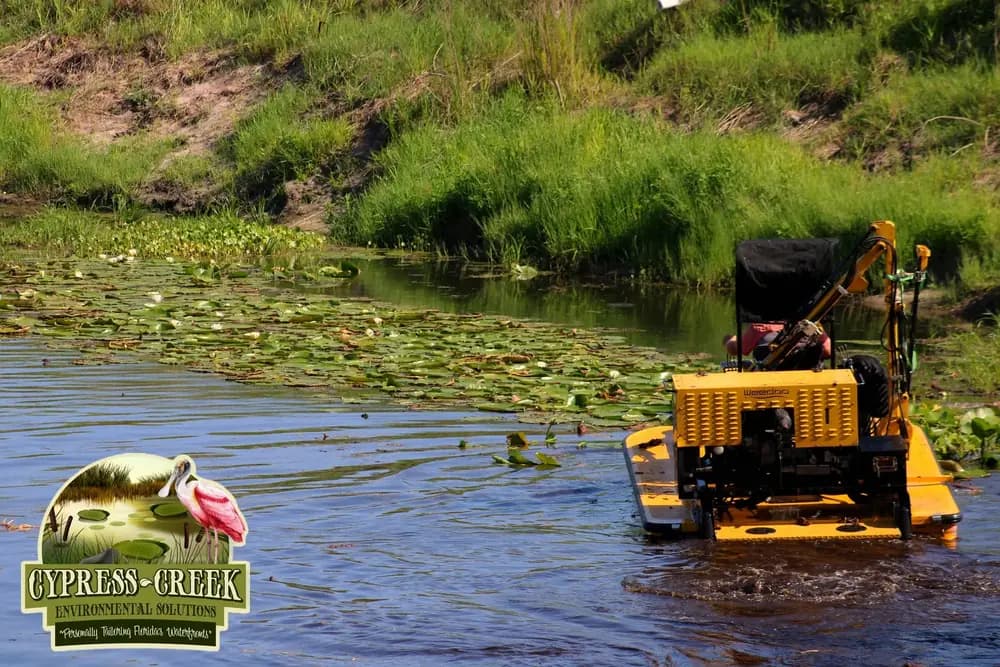
Cutting and collecting aquatic vegetation across open water, then bringing it ashore rather than leaving it to sink and decay.
Environmental Services · Florida
Specialized machines for clearing aquatic weed and debris — canals, shorelines, boat ramps, and residential docks, from overgrown vegetation to sunken boats.
Overview
This is a field that rewards the right equipment. We run machines built specifically for working on the water, which lets us clear canals, shorelines, boat ramps, and residential docks without tearing up the bank to get access.
Weed removal deals with the vegetation choking a waterway. Debris removal deals with everything else that ends up in it — garbage, downed trees, muck, fallen docks, and sunken boats.
Service Capabilities
A focused scope built around the property, current conditions, and the outcome you need.
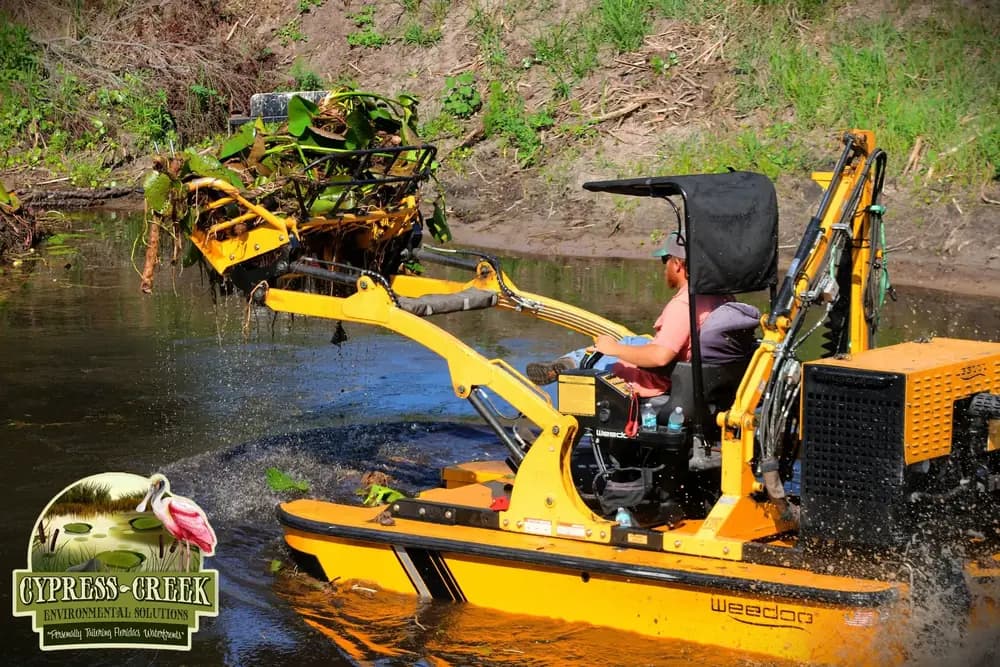
Cutting and collecting aquatic vegetation across open water, then bringing it ashore rather than leaving it to sink and decay.
Compact, highly maneuverable workboats that get into the tight spots — shorelines, dock areas, and narrow canals.
A stable working platform for moving material and equipment where there is no easy access from land.
Excavation reach from the water itself, for shorelines and banks that cannot be worked from the shore.
Removing accumulated muck and sediment from the bottom, restoring depth and open water.
Garbage, downed trees, muck, fallen docks, and sunken boats — cleared out of the waterway and taken away.
Why It Matters
Overgrown vegetation and accumulated debris restrict flow, block access to ramps and docks, and steadily reduce the usable open water. Left in place, cut vegetation sinks and decays, feeding the next round of growth.
Mechanical removal takes the material out of the system entirely. Canals, shorelines, boat ramps, and docks become usable again, and the nutrients tied up in that biomass leave with it.
Our Process
Clear communication, careful field review, and practical work from the first conversation through completion.
We look at what is in the waterway, how bad the access is, and which machine can actually reach it.
Harvester, Weedoo, barge, floating excavator, or dredger — matched to the site and the material.
Material is cut or lifted, brought ashore, and hauled away rather than left in the system.
Ramps, docks, shorelines, and open water handed back in usable condition.
Weedoo Boats & Harvesters
Canals, boat ramps, and residential docks are hard to reach from land. Working from the water — with harvesters, Weedoo boats, slide barges, floating excavators, and dredgers — means clearing the waterway without wrecking the bank to get to it.
Discuss Your Property →Related Services
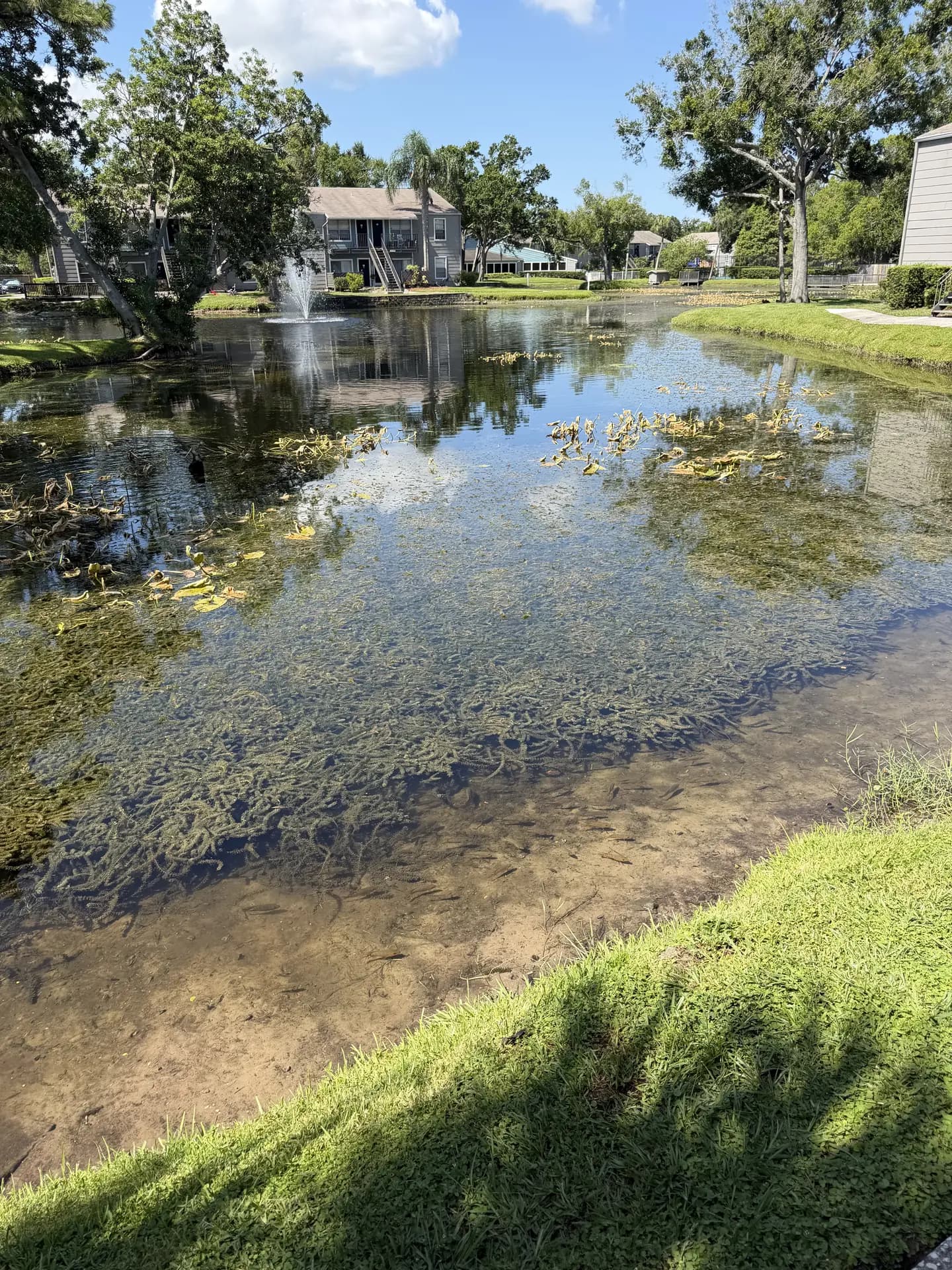
Professional pond, lake, and waterway management solutions designed to control vegetation, improve water quality, and support healthy aquatic ecosystems.
Explore service →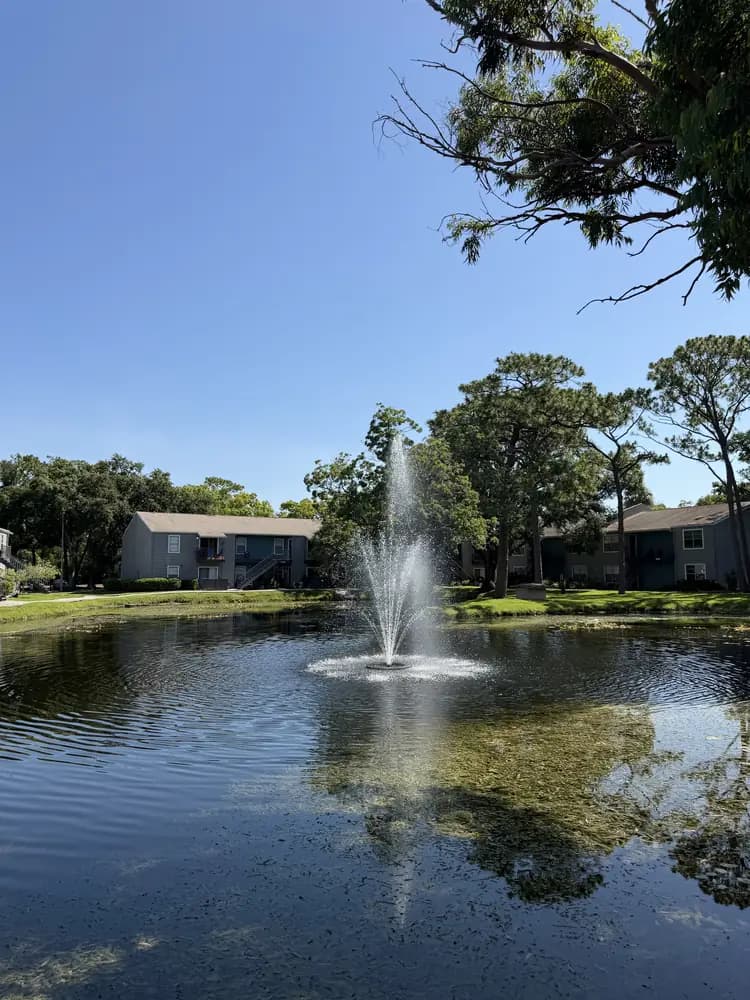
Fountains and aeration systems that keep water moving — improving water quality, supporting fish health, and preventing the stagnation that causes most pond problems.
Explore service →
Practical erosion control for Florida shorelines, slopes, and banks — from soft, living solutions that re-anchor soil with roots to hardened systems built to carry traffic.
Explore service →Common Questions
Helpful starting points for property owners and project teams planning environmental work in Florida.
Mostly garbage, downed trees, muck, fallen docks, and sunken boats. If it has ended up in the water and should not be there, it is generally something we can get out.
Canals, shorelines, boat ramps, and residential docks. Because our machines work from the water, we can reach areas that cannot be accessed from the bank.
Inland lake harvesters and Weedoo boats for vegetation, plus slide barges, floating excavators, and dredgers depending on the site and what needs to come out.
Mechanical removal takes the material out of the waterbody. Vegetation that is treated and left in place sinks, decays, and releases its nutrients back into the water, which feeds the next round of growth.
Get In Touch ↟
Tell us about your property or waterway and we'll get back to you with next steps.
Start with a Site Conversation
Tell us what you are seeing and what you want the land or water to become. We will help define a practical next step.